


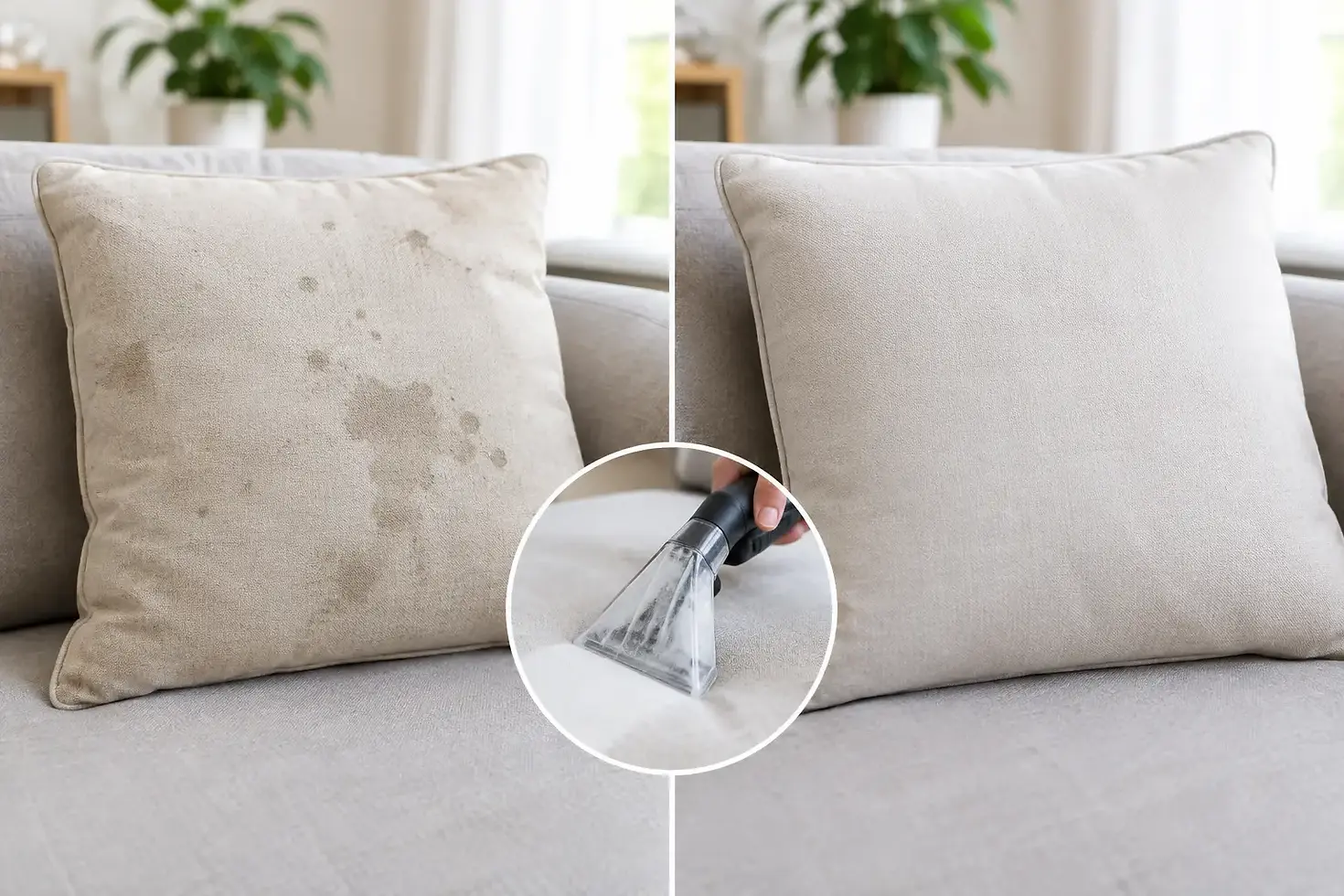
Cushion Cleaning Example: From Marks to Fresh
A biscuit crumb, a cup of tea tipped during a busy morning, and a dog who has claimed the sofa corner as their own: this cushion cleaning example shows why the right approach matters. Cushions can look tired quickly, but over-wetting or using the wrong product can leave water marks, shrink covers or set a stain more firmly into the fabric.
The aim is not to scrub a cushion until it looks wet and hopeful. It is to remove soil carefully, protect the filling and fabric, and leave the room fresh without creating a bigger problem than the original mark.
A realistic cushion cleaning example
Imagine a removable pale-grey sofa cushion with a small tea stain, general dullness around the edges and a faint pet smell. It is a common situation in busy family homes, rented properties and lounges that see plenty of everyday use.
Before any cleaning starts, check the care label. A label marked W usually means water-based cleaning methods are suitable. S suggests a solvent-only approach, while WS means either may be appropriate. X means vacuum only and should not be treated with water or solvent at home. These codes are useful guides, although a label is not a guarantee that every cleaner or technique is safe.
In this example, the label is marked W. Start by removing loose dirt with the upholstery attachment on a vacuum cleaner. Work along seams, piping and both sides of the cushion, using gentle passes rather than pressing hard. This step matters because dry grit can turn into muddy residue once moisture is added.
Next, blot the tea mark with a clean white cloth lightly dampened with cool water. Do not rub in circles. Rubbing spreads the stain and can roughen delicate fibres, particularly on woven, velvet-effect or brushed fabrics. Blot from the outside of the mark towards the centre, changing to a clean section of cloth as colour transfers.
If the mark remains, use a small amount of suitable pH-balanced upholstery cleaner after testing it on an inconspicuous area first. Apply the product to the cloth rather than soaking the cushion. Blot gently, then use another clean, slightly damp cloth to remove any remaining solution. Finally, press with a dry towel to draw out as much moisture as possible.
The cushion should then air-dry naturally in a well-ventilated room. Keep it out of strong direct heat and avoid putting it straight back on the sofa while damp. Turn it occasionally if both sides have been cleaned, and reshape the filling as it dries. Once fully dry, a light vacuum can lift the pile and restore a more even finish.
Why the fabric check comes first
It is tempting to treat every cushion as washable because it has a zip or removable cover. That is not always the case. Some covers are dry-clean only, while others may tolerate a careful spot clean but distort in a washing machine. Feather-filled cushions, foam inserts and fabrics backed with adhesive need particular care.
Colourfastness is another consideration. Dark navy, red, green and patterned fabrics can release dye when wet. Test a hidden section with a lightly dampened white cloth. If colour transfers, stop there. A professional assessment is the safer option.
Cushions without labels need extra caution. Their fabric may be natural, synthetic or a blend, and the filling could react badly to moisture. Linen and cotton can shrink, velvet can develop water marks, and some faux suede materials require a specialist method. When you cannot identify the fabric with confidence, avoid experimenting with household sprays.
What this cushion cleaning example gets right
The method above is deliberately restrained. Most upholstery damage happens when too much product, water or force is used in the hope of getting a faster result. Effective cleaning is usually controlled cleaning.
A few sensible choices make a real difference:
Vacuum before applying any moisture, so loose dirt does not become a dirty paste.
Treat the smallest area needed rather than wetting the whole cover for one localised mark.
Use white cloths, as coloured towels can transfer dye to light upholstery.
Blot patiently instead of scrubbing, especially on textured or delicate materials.
Let cushions dry fully before use, reducing the risk of musty odours or uneven drying marks.
There is a trade-off, of course. Gentle spot cleaning is ideal for a fresh spill or light mark, but it may leave a visibly cleaner patch on an older, generally soiled cushion. In that case, cleaning the whole cushion face with the correct method may give a more even result. That is where experience and proper equipment become valuable.
Stains that need a different response
Not every mark should be treated in the same way as tea. Greasy food stains should first be gently lifted with a dry cloth, without adding water immediately. Ink, nail varnish, makeup and unknown coloured spills can spread or permanently alter fibres when treated with the wrong product.
Pet accidents also need prompt attention. Blot up moisture first, then use a suitable upholstery treatment designed to address both the stain and odour. Avoid masking smells with fragrance sprays, as they do not remove the residue causing the problem. If a smell has reached the cushion filling or sofa base, surface cleaning alone may not be enough.
For old stains, it depends on what caused them, how long they have been present and whether they have already been treated. A faded mark may improve significantly but not disappear completely. A reputable cleaner should be honest about that before work begins, rather than promising a result that the fabric cannot realistically deliver.
When to call a professional upholstery cleaner
A home clean can be perfectly reasonable for a recent spill on a clearly labelled, washable fabric. Professional help makes more sense when cushions are expensive, heavily soiled, delicate, colour-sensitive or affected by odours. It is also a sensible choice if several sofa cushions need cleaning together and you want an even finish across the furniture.
Professional upholstery cleaning is not simply about stronger products. The process should be matched to the fabric, filling and condition of the item. Controlled moisture use and suitable pH-balanced products help protect the upholstery while lifting embedded soil that vacuuming and surface wiping cannot reach.
For households with young children or pets, product choice matters just as much as visible results. Ask what will be used, how long drying is likely to take and whether the cleaner is insured. These practical questions help you choose a service you can feel comfortable having in your home.
Connect Carpet Cleaning provides professional carpet and upholstery cleaning across Warrington and the wider North West, using pH-balanced products selected with children, pets and household fabrics in mind. As a family-run local business, the team offers flexible appointments, including weekends, alongside DBS certification and comprehensive insurance for added reassurance.
Keeping cushions fresher between cleans
Regular care prevents a small build-up from becoming a full upholstery-cleaning job. Vacuum cushions during your normal weekly clean, including the sides and seams. Rotate and plump loose cushions so the same area does not receive all the pressure, body oils and sunlight. Deal with spills promptly, and keep pets' favourite throws washable where possible.
If cushions start to look flatter in colour or hold onto a lingering smell despite regular care, that is usually the right time to arrange a proper clean rather than waiting for a special occasion. A clean, comfortable sofa changes how a room feels, and careful action now can help your favourite seat stay that way for longer.


Comments