


How to Remove Carpet Odours That Keep Coming Back
A carpet can look perfectly clean and still make a room feel less than fresh. The reason is simple: fibres hold onto tiny particles from shoes, cooking, pets, spills and everyday life. To remove carpet odours properly, you need to deal with what has settled below the surface, not simply cover the smell with fragrance.
A quick spray may make the room smell better for an hour or two, but persistent odours often return when the carpet becomes warm or damp. For homes with children, pets or regular visitors, choosing a safe approach matters just as much as getting a fresh result.
Why carpets hold onto unpleasant smells
Carpet is designed to be soft and absorbent, which is lovely underfoot but less helpful when something spills. Liquid can pass through the pile and into the backing, underlay or even the floor beneath. Once moisture dries, it can leave behind the bacteria, proteins or residues that cause a lingering smell.
Not every odour has the same cause. Pet urine, for example, needs a different treatment from a musty smell caused by damp conditions. Food and drink spills can turn sour, while smoke and cooking odours tend to settle gradually across a larger area. Identifying the source helps prevent wasted effort and avoids applying products that are unlikely to work.
A room can also smell stale when dirt builds up in the carpet over time. Fine dust, skin cells, pet hair and outdoor grime may not be obvious at first glance, yet they can affect how fresh the space feels. This is especially common in hallways, living rooms, rental properties and busy offices.
Find the cause before treating the smell
Start by checking whether the smell is localised or spread across the room. If it is strongest in one spot, look for a recent spill, a pet accident, a plant pot leak or damp coming in from an outside wall. Use your hands to feel for damp patches, but avoid rubbing the area as this can push residues deeper into the fibres.
Pet accidents
Pet odours are often the most stubborn because urine can travel further than expected. Even if the surface looks dry, residue may remain in the backing or underlay. A treatment designed to break down organic residue is generally more effective than a heavily scented cleaner. If an old smell returns on humid days, the affected area may need a deeper clean than a household product can reach.
Damp and mildew
A musty smell should never be ignored. It may be caused by a carpet that was cleaned too wet and did not dry quickly, but it can also point to an underlying issue such as a leak, condensation or rising damp. Do not keep adding deodoriser to a damp carpet. Find and resolve the moisture source first, then make sure the room is well ventilated while the carpet dries.
Food, drink and everyday spills
Milk, wine, gravy and other food spills can leave more than a visible mark. When residue remains in the pile, When residue remains in the pile, it can contribute to bacterial activity and create an unpleasant smell. Blot fresh spills promptly with a clean, dry cloth. Avoid scrubbing, as this spreads the spill and can damage the pile.
Smoke and general stale odours
Smoke, cooking and general household odours are usually spread throughout the carpet rather than concentrated in one place. Regular vacuuming helps, particularly around skirting boards, beneath furniture and in high-traffic areas. However, if the carpet has not had a proper deep clean for some time, vacuuming alone will not lift the embedded soil causing the smell.
How to remove carpet odours safely at home
For a mild, dry odour with no obvious stain, a thorough vacuum is the best first step. Move lightweight furniture where possible and use the appropriate attachments around edges. This removes pet hair, crumbs and dry debris that can trap smells in the pile.
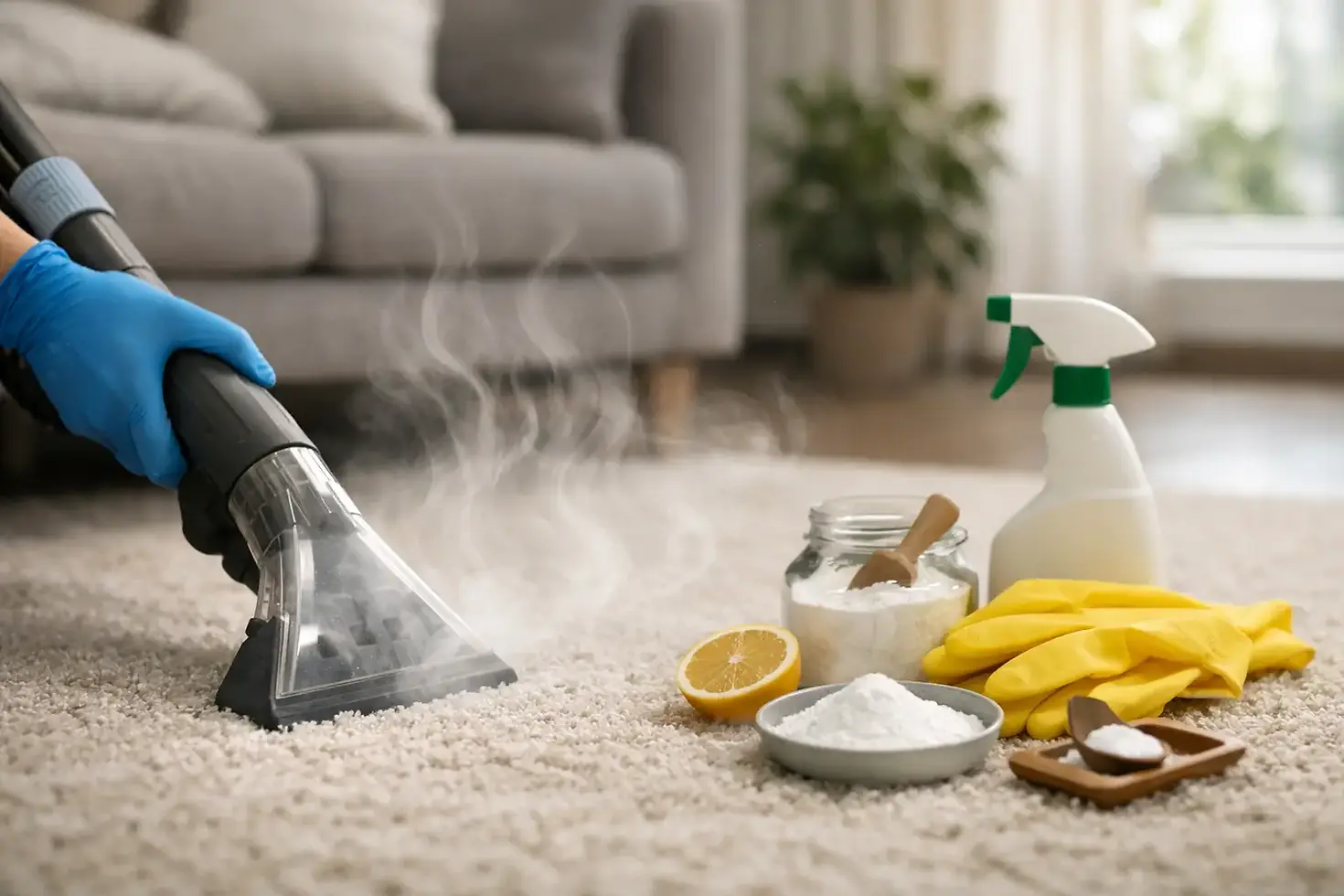
Bicarbonate of soda can help absorb light surface odours. Sprinkle a modest, even layer over a completely dry carpet, leave it for several hours or overnight, then vacuum slowly and thoroughly. It is not a cure for urine, damp or deep contamination, but it can be useful between professional cleans. Check your carpet manufacturer's guidance first, particularly with delicate wool carpets, and keep pets and children away from the treated area until it has been fully vacuumed.
For a fresh spill, blot rather than rub. Work from the outside of the affected area towards the centre to stop the mark spreading. Use only a small amount of an appropriate carpet cleaner, test it in an inconspicuous spot first and follow the label directions. Too much solution can leave a sticky residue which attracts more dirt and may create another odour problem.
It is tempting to soak the area with hot water, washing-up liquid or strong disinfectant. This can make matters worse. Over-wetting encourages dampness, while some household chemicals can affect carpet colour, leave residue or react badly when mixed with another product. Never mix cleaning chemicals, and take extra care with bleach-based products around coloured carpets, pets and children.
Open windows where practical and improve airflow while the carpet dries. A fan can speed this up, particularly after spot treatment. The goal is a clean carpet that is dry as quickly as possible, not a carpet that has been left wet in the hope that more moisture will remove the smell.
When a professional carpet clean is the better option
Home treatments have their place, but they cannot always reach contamination beneath the visible pile. If an odour returns soon after cleaning, covers a large area, follows a pet accident, or is linked to a property handover, professional cleaning is usually the more reliable choice.
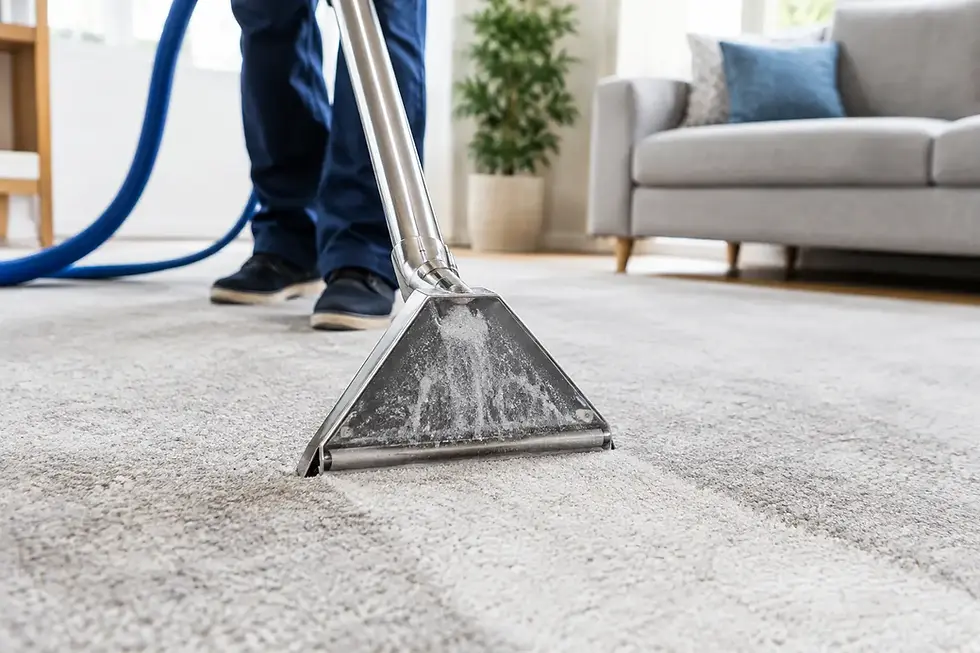
A professional clean can remove built-up soil and odour-causing residue while refreshing the overall appearance of the carpet. This is particularly worthwhile before moving out of a rented property, welcoming new tenants, preparing a home for sale or getting an office ready for staff and clients.
The condition and age of the carpet matter. Some older carpets have stains or wear that cannot be fully reversed, and a cleaner should be honest about that. Even so, removing the dirt and residue behind an unpleasant smell can make a noticeable difference to how the room looks, feels and smells.
For customers in Warrington and across the North West, Connect Carpet Cleaning provides professional carpet cleaning with pH-balanced products chosen to be kind to homes with children and pets. DBS-certified, insured technicians and flexible appointments, including weekends, mean you can arrange a quality clean around a busy household, tenancy schedule or working day.
Our 45 Day Stay Clean Guarantee
We want you to feel confident in your clean. That’s why our 45 Day Stay Clean Guarantee gives you added peace of mind after your carpet or upholstery has been professionally cleaned. If an accident, spill, pet issue or everyday mishap affects an area we’ve cleaned, get in touch and we’ll do our best to put it right.
Keep carpets fresher for longer
The best way to prevent odours is to stop residue building up in the first place. Vacuum regularly, deal with spills promptly and make sure cleaned areas dry fully. Door mats at entrances can also reduce the mud and moisture carried in on shoes, especially during wet Cheshire weather.
If you have pets, address accidents as soon as possible and consider having frequently used rooms professionally cleaned before smells become established. In rental homes, a deep clean before the final inspection can help present the property at its best and support a smoother handover.
A fresh carpet should not smell strongly of perfume. It should simply make the room feel clean, comfortable and ready to enjoy. When a smell keeps returning despite your best efforts, arranging a free quote for a deeper clean can be a practical next step.


Comments